
How to Choose the Right Hotel for Your Holiday:
A Real Traveller’s Guide to Making the Perfect Pick
Planning a holiday is exciting. Flights booked? Check. Excursion ideas? Double check. But one of the most important—and often overlooked—parts of any trip is your accommodation. Finding the right hotel can make or break your holiday. And let’s be honest, with thousands of options available online, it’s easy to feel overwhelmed. I’ve been there—scrolling through reviews at 1 AM trying to figure out if “close to the beach” means 2 minutes or 20.
So, in this guide, I’m sharing everything I’ve learned about how to choose the right hotel for your holiday. From setting priorities like budget, location, and amenities, to answering the most Googled questions people ask before booking, you’ll find everything you need right here.
Why Is Choosing the Right Hotel So Important for Your Trip?
Let’s kick things off with a question I hear a lot:
“Does it really matter where I stay if I’m only sleeping there?”
Yes, it does. Your hotel is your home base. It’s where you’ll rest after long days exploring, where you’ll eat breakfast, and possibly where you’ll enjoy a pool, spa, or rooftop view. A poor choice can lead to stress, discomfort, or unexpected costs—none of which belong on a relaxing holiday.

What Are the Key Factors to Consider When Booking a Hotel?
Before you start scrolling endlessly through hotel options, it’s important to stop and ask: What really matters to me on this trip? Your hotel should suit your travel goals—not just your budget. Whether you’re travelling for relaxation, adventure, romance, or work, these are the key factors you should think about first.
Each one can make a huge difference to how enjoyable (or stressful) your holiday becomes.
Let’s break them down…
Location: Are You Staying Where You Want to Be?
This is probably the most important factor—and surprisingly, the one most people overlook in favour of photos or star ratings.
Ask yourself: “How close do I want to be to the things I came here to see or do?”
Do you want to wake up and walk straight to the beach? Be steps from a buzzy city centre? Or maybe you’re after peace and quiet, far from the crowds. The right location can save you time, money, and a lot of hassle.
Tip: Use Google Maps or Street View to check the surroundings before you book. What looks “central” on a hotel’s website might actually be a 30-minute uphill walk from anywhere interesting.
Budget: What’s Your Real Price Comfort Zone?
Your budget doesn’t just decide how “nice” your hotel is—it influences everything from your location to the size of your room and even the quality of sleep you get.
Ask yourself: “What am I truly willing to spend per night, and what am I okay sacrificing for that price?”
Are you happy to stay somewhere simple if it means splurging on a spa treatment or fine dining elsewhere? Or would you rather have a luxurious base and skip a few paid attractions?
Remember: The cheapest option isn’t always the best value. A cheaper hotel that’s far away from everything might cost you more in taxis or transport.
Amenities: What Hotel Perks Will Actually Improve Your Stay?
Hotels love to list dozens of features—but how many of those will you actually use?
Ask yourself: “What’s a deal-breaker and what’s just a nice-to-have for me?”
For example:
If you’re a remote worker, strong Wi-Fi and a desk might be essential.
Travelling with kids? A pool or kids’ club could be a game-changer.
Planning lazy mornings? Breakfast included might be non-negotiable.
My approach: Prioritise amenities you’ll use every day of your trip. Don’t get lured in by rooftop yoga classes you know you’ll never attend!
Guest Reviews: What Are Real Travellers Saying?
We’ve all seen glossy hotel photos—but what’s it really like to stay there?
Ask yourself: “Are people generally happy here, and are they the kind of travellers like me?”
A 4-star review from a business traveller might not match what a couple on a romantic getaway expects. Look for reviews from people who share your travel style, and focus on consistent themes—both good and bad.
Red flag! If multiple recent guests say “the photos are misleading” or “the walls are paper-thin,” believe them.
Transport and Access: How Easy Is It to Get Around?
Even the best hotel can become a nightmare if it’s miles from the action or public transport.
Ask yourself: “How much time do I want to spend commuting each day?”
Can you walk to the places you want to visit? Is there a metro, tram, or bus nearby? Will it be safe and well-lit if you’re out late?
In places like Tokyo, Paris or London, being close to a transit hub can be a bigger win than a fancy view.
Hotel Type and Brand: What Style of Stay Do You Want?
Hotels come in all shapes—boutique, luxury, chains, eco-lodges, resorts, or even hostels. Each offers a different vibe.
Ask yourself: “What kind of experience do I want to have at my hotel?”
Do you prefer the familiarity and predictability of a global hotel brand? Or are you more into charming, locally-owned boutique hotels that feel unique and personal? Would you enjoy all-inclusive pampering, or do you want something minimalist and self-catering?
Your hotel should reflect you. The same trip can feel completely different depending on where you choose to sleep.
Booking Policies: Can You Change Your Mind Without Losing Money?
Here’s the unglamorous—but super important—part of choosing a hotel: the small print.
Ask yourself:“If my plans change, what happens to my booking?”
Is the cancellation policy flexible?
Do you pay upfront or at the property?
Are there hidden fees (like cleaning or city taxes)?
Will you get charged if your flight is delayed and you check in late?
Never assume a good deal means a good policy. Sometimes, paying a little extra for flexibility is well worth the peace of mind.
Putting It All Together
There’s no one-size-fits-all formula for choosing the perfect hotel—but asking the right questions helps you book with confidence. Think of these key factors as your personal hotel checklist. If a place ticks all the boxes that matter to you, then you’re far more likely to enjoy your trip, sleep better, and spend more time making memories than solving problems.

How Do I Decide What’s Most Important in a Hotel?
It really depends on your travel style. Are you going on a romantic city break, a family beach holiday, or a solo backpacking trip? Here’s how I break it down:
- City breaks: Prioritise central locations and walkability.
- Beach holidays: Proximity to the beach and pool access is key.
- Family holidays: Look for family rooms, kids clubs, and dining options.
- Adventure holidays: Look for helpful staff, tour desks, and safe surroundings.
Where Should I Stay on a Budget Holiday?
Top Tip: When using GoWorldwide.co.uk you can search by a star rates, and also filter by price range. We would suggest starting off with a wide search and then use the filter options on the results page to find yourself a bargain stay that meets your holiday needs and budget.
If budget is a top concern, there are still ways to stay somewhere clean, convenient, and even a little stylish. Try this approach:
- Set a realistic price range. Use filters on GoWorldwide.co.uk to avoid overspending.
- Check alternative accommodations. Hostels, guesthouses, and apart-hotels can offer more value.
Pro tip: In places like Lisbon, Krakow, or Bali, even lower-cost hotels can offer stunning views and excellent service. Just because it says budget – doesn’t mean it’ll be a terrible stay.
How Do I Find the Best Hotel Location?
Top Tip: You can use the Attractions & Tour search on GoWorldwide.co.uk to find various attractions all over the world. When you have found one you want to visit, you can check the attractions location of the the website’s map and use that when searching for the best hotel to stay in.
The golden rule: location trumps luxury if you want to explore easily. I always ask:
- Is it close to main attractions?
- Is public transport nearby?
- Is it safe to walk around after dark?
You can also use Google Maps to drop a pin on your hotel and check walking distances to sights, restaurants, and transport.

What Hotel Amenities Are Actually Worth It?
It’s easy to get wowed by fancy add-ons, but what’s really worth it?
Must-haves:
- Free Wi-Fi
- Air conditioning (in warm destinations)
- 24/7 reception/security
- Breakfast included
Nice-to-haves:
- Swimming pool
- Spa or gym
- Late check-out
- Room service
Avoid paying extra for things you won’t use. if it’s free then great but If you’re going to be out all day, that luxury spa you paid for might just go to waste.

How Do I Compare Hotel Reviews Without Getting Confused?
Let’s be honest: reading hotel reviews can feel like detective work. One person says it’s “the best stay of their life,” while another claims “worst hotel ever, avoid at all costs.” Sound familiar?
If you’ve ever fallen into a review rabbit hole at midnight before booking, you’re not alone. I’ve done it more times than I care to admit. But over time, I’ve learned how to sift through the noise and find the truth behind the stars.
Here’s how to read hotel reviews effectively—so you can book with confidence.
Step 1: Focus on Recency First
Ask yourself: “Are these reviews from this year—or even better, the past few weeks?”
Hotels can change quickly. A management change, renovation, or even a sudden influx of new staff can completely shift the experience. Reviews from two years ago might no longer be relevant.
Look for reviews dated within the last 6 months—especially if you’re travelling soon.
Step 2: Look for Patterns, Not One-Offs
Ask yourself: “What are most people saying about this hotel?”
Don’t panic over a single 1-star review if it’s buried in a sea of glowing feedback. Everyone has different standards. Instead, scan for patterns:
If dozens of guests complain about “dirty bathrooms,” there’s a good chance that’s a real issue.
If multiple people praise the same receptionist or breakfast buffet, that’s likely legit too.
Tip: Sort reviews by “most recent” and “lowest rating” to compare experiences across the board.
Step 3: Use Keyword Searching
Ask yourself: “What are my deal-breakers or must-haves—and what do guests say about them?”
Use the search bar in reviews to filter by words like:
“Noise”, “Wi-Fi”, “Clean”, “Pool”, “Parking”, “Safe”, “Location”
This helps you skip the fluff and jump straight to the details you care about.
For example: If you’re a light sleeper, search for “quiet” or “noisy” to quickly find relevant feedback.
Step 4: Check Guest Photos, Not Just the Hotel’s
Ask yourself: “Do the real photos match what the hotel advertises?”
Let’s face it—hotels love wide-angle lenses and filters. But guests? They post what the place actually looks like.
Look for:
- Real shots of the rooms, bathrooms, hallways, and lobby
- Unedited images of views, pools, and dining areas
- Photos taken at different times of day (natural light matters!)
If the difference between promo pics and guest pics is night and day… that’s a red flag.
Step 5: Read a Mix of Positive and Negative Reviews
Ask yourself: “What did guests love—and what didn’t they?”
Reading only bad reviews will scare you off. Reading only 5-star raves won’t prepare you for reality. So strike a balance. For each hotel, I aim to read:
- 2–3 highly positive reviews
- 2–3 mid-level reviews (3 stars)
- 1–2 negative reviews
This gives me a full picture—and lets me weigh what really matters to me.
Example: I once stayed at a hotel with “terrible Wi-Fi” reviews—but I didn’t care because I was unplugging. For someone else, that’d be a deal-breaker.
Step 6: Watch Out for Review Repetition or Bots
Ask yourself: “Do these reviews seem real and detailed—or fake and repetitive?”
Some hotels (unfortunately) use shady tactics to inflate their ratings. If you spot vague, copy-paste-style reviews that just say “Amazing stay!” without detail—be suspicious.
Real guests usually share specifics: what room they had, how staff treated them, or what surprised them.
Step 7: Match Reviews to Your Type of Trip
Ask yourself: “Is this hotel a good fit for my kind of holiday?”
A glowing review from a family might mean lots of child-friendly amenities—but that same place could feel noisy or chaotic for a solo traveller or couple seeking peace.
Look for reviewers who mirror your:
- Travel group (solo, couple, family)
- Priorities (relaxation, location, work, adventure)
- Destination goals (sightseeing vs. all-inclusive chill)
The perfect hotel for someone else might not be the perfect one for you.
What’s the Best Way to Book a Hotel?
Here’s how I book now:
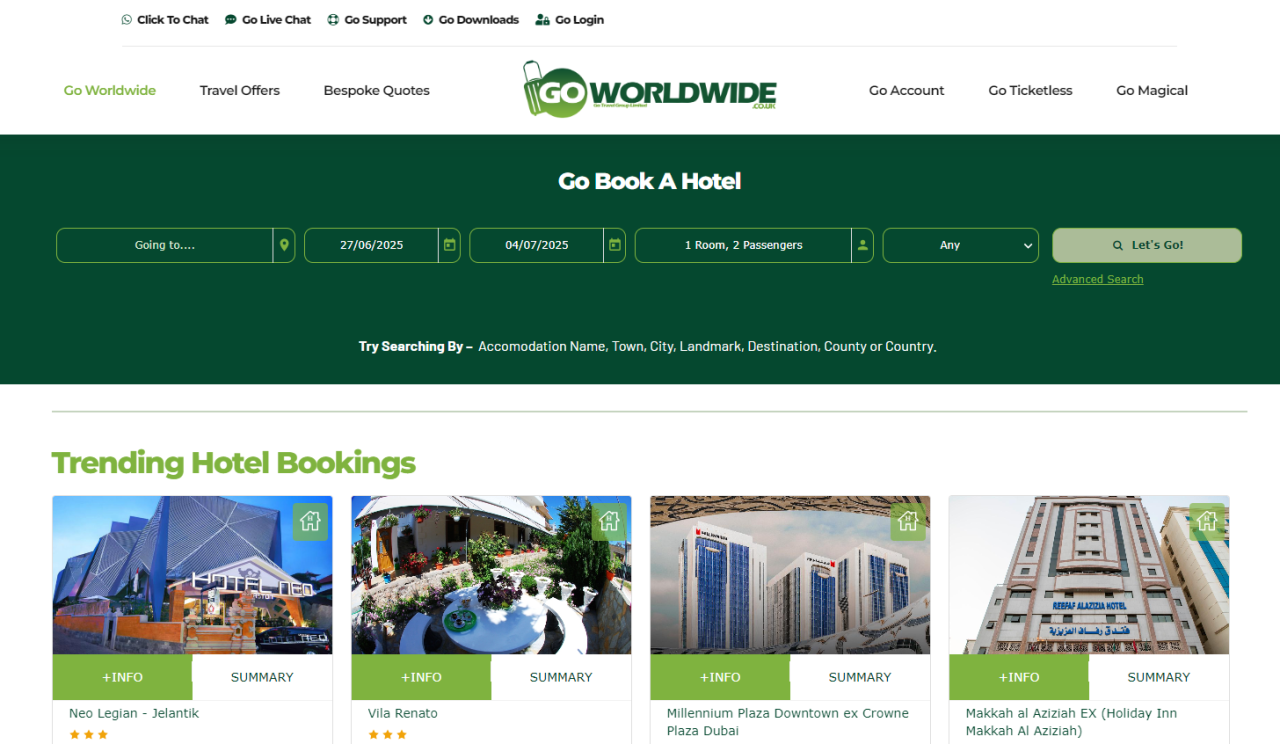
- Start with comparing the different costs on a various websites, although i’m pretty sure you’ll be happy with the pricing you’ll find on GoWorldwide.co.uk. But it’s always good to compare!
- Check the official hotel website for perks or exclusive deals of booking direct and decide if these are worth paying more to the property over booking the room at a lower price with a third party.
- Look for free cancellation options in case plans change. Non-refundable rates are fine if your planning on travelling within the next week or so or the price is too good to pass up. However, having the flexibility of a low/no deposit on a free cancellation policy will take a lot of stress off your shoulders when planning your travels. Things happen and so being able to easily make changes on a refundable room is a real benefit to booking your hotel/holiday with someone like Go Worldwide.
Pro Tip: GoWorldwide.co.uk is also one of the best sites customers use for hotel-only bookings, especially across Europe. This is because the pricing is generally better than other third party sites, the platform is very user-friendliness and easy to navigate, and personally something that is important to me when travelling is to have good customer service. Go Worldwide’s Go Support Team are on the ball, real humans and quick to solve any issues that may arise. They are also very knowledgeable and willing to offer personal recommendations based on their own experiences.
When Should I Book My Hotel for the Best Price?
Dynamic pricing is becoming more and more a popular model used by suppliers of travel services. The demand, the current availability, and the more people simply look at something at the same time as others (even if they do not book) can drive pricing unexpectable upwards. Take theme park tickets, the more people look at popular dates, the more an attraction believes there is a demand for that date/ticket type – and so the live price goes up based on that demand. Same can be said with hotels, flights, transfers and other travel elements.
Top Tip: Try not to search for anything unless you are really looking to travel. Just browsing because you can, may make pricing in general go up for everyone actually looking to book. Remember this for when you actually want to find a holiday deal to book but pricing seems too high. Maybe too many people have just be boredom browsing.
Prices vary more than you might expect. Here’s what I’ve found works best:
- For peak seasons: Book 2–3 months in advance.
- For off-season travel: 2–4 weeks in advance can get you a deal.
- For last-minute bookings: Always the book and go approach. You may find some real bargains just hours before you travel.
Pro Tip: Weekdays are also generally cheaper than weekends, especially in city hotels.

Are Hotel Star Ratings Still Relevant?
Star ratings give a general idea of quality—but they aren’t universal. A 4-star in Greece might feel like a 3-star in the U.S, which could be described as a value accomodation.
Value Hotels: (1–2 Stars Equivalent)
These are your most affordable options.
Think: motel-style, basic guesthouse, or budget hotel chains
Minimal staff interaction or services
You’ll often make your own bed, carry your own bags, and maybe even share a bathroom in extreme budget cases
Usually located outside city centres or in less prime locations
Ask yourself: “Am I happy with the basics if it means spending more on activities and food?”
Moderate Hotels: (3–4 Stars Equivalent)
This is the “sweet spot” for many travellers.
Think: well-known mid-range brands like Novotel, Courtyard by Marriott, or Holiday Inn
On-site restaurants, bars, pool, and fitness room are common
Rooms are comfortably sized with TV, Wi-Fi, and private bathrooms
Often includes daily cleaning, 24-hour reception, and some business or leisure amenities
Ask yourself: “Do I want a balance between comfort and cost, without splurging?”
Deluxe Hotels: (4–5 Stars Equivalent)
High-end accommodation with refined details.
Think: luxury chains (Four Seasons, Ritz-Carlton, Waldorf Astoria) or 5-star resorts
You get top-tier service: concierge, valet, bell staff, spa treatments, turndown service
Often in iconic or premium locations (beachfront, central plazas, or landmark views)
Decor is elegant, rooms are spacious and feature luxury bedding, minibars, robes, etc.
Ask yourself: “Do I want a hotel experience that’s part of the holiday itself?”
Quick Summary:
- Value = Low-cost, simple stays (1–2 stars)
- Moderate = Comfort + convenience (3–4 stars)
- Deluxe = Full-service luxury (4–5 stars)
Hotel vs Airbnb vs Resort for Holidays: Which One Is Right for You?
With more options than ever before, choosing where to stay on your holiday is no longer as simple as picking a hotel. These days, Airbnb, resorts, and even aparthotels compete for your booking—and each has its own unique perks (and drawbacks).
But how do you know which one suits your travel style?
Let’s break it down by what each type offers—and the questions you should ask to help decide.
Traditional Hotels: Convenience, Service, and Familiar Comfort
Hotels are the “classic” option for a reason. Whether you’re booking a 2-star city break or a 5-star luxury retreat, hotels usually come with a consistent level of service, safety, and structure.
Pros:
Daily housekeeping
24/7 reception and security
On-site restaurants and bars
Room service and concierge help
Loyalty programmes and rewards (for chains)
Cons:
Smaller living space compared to rentals
Limited kitchen or laundry facilities
Can be more expensive in popular tourist areas
Ask yourself: “Do I want comfort and support, with everything taken care of for me?”
Ideal for: Short stays, couples, solo travellers, business trips, or people who prefer not to cook.
Airbnb (or Short-Term Rentals): Space and Local Living
Airbnb and similar platforms (like Vrbo or Booking’s “homes” section) have exploded in popularity—especially for travellers seeking space, privacy, and a more “authentic” feel.
Pros:
More space: separate bedrooms, living areas, full kitchens
Feels like home, especially great for families or groups
Unique, locally designed interiors
Can save money on food by cooking
Often in residential areas, not tourist zones
Cons:
No daily cleaning or hotel-style service
Hosts can cancel last-minute (rare but stressful)
You may have to follow strict check-in/out or “house rules”
Location and quality vary more than with hotels
Extra service or cleaning fees can add up
Ask yourself: “Am I comfortable managing my own stay without on-site staff or hotel support?”
Ideal for: Longer stays, families, digital nomads, groups of friends, or anyone wanting privacy or self-catering.
All-Inclusive Resorts: Relaxation and Entertainment Rolled Into One
If your idea of a holiday is doing absolutely nothing but relaxing, an all-inclusive resort may be perfect. Resorts often offer accommodation, meals, drinks, entertainment, and activities all in one neat package.
Pros:
Everything’s included—no budgeting stress~
Multiple restaurants and bars on-site
Pools, spas, shows, kids clubs, gyms
Often located in stunning beachfront or tropical areas
Great for couples or families wanting relaxation
Cons:
Less connection with the local culture or surroundings
Can feel commercial or “generic”
You may not want to leave the resort—and miss exploring the destination
Limited dining options compared to a city
Ask yourself: “Do I want a true escape where I don’t have to plan anything once I arrive?”
Ideal for: Honeymoons, family holidays, winter sun breaks, or travellers who just want to relax.
So, Which One Should You Choose?
Here’s a quick cheat-sheet based on your travel style:
- Travelling with kids or a large group? Airbnb gives you space, kitchens, and flexibility.
- Romantic getaway or honeymoon? A resort or high-end hotel creates a pampered, luxurious vibe.
- Solo city break or business trip? Hotels are more secure, social, and service-oriented.
- Want to live like a local? Airbnb or short-term rental is your best bet.
- Want to do absolutely nothing? Resort, all the way.

How Do I Choose a Hotel That’s Right for Kids?
Travelling with children? Then you already know the hotel you choose isn’t just a place to sleep—it can make or break the entire trip.
When using hotel booking websites like GoWorldwide.co.uk, you’ll often find filters on the results page to narrow down hote choices that are good for families, or have certain family orientated amenities. Using these filters can focus the hotel choices to what may be best for your family getaway.
When you’re on holiday with kids, suddenly things like “room size” and “breakfast options” become just as important as pools and theme parks. As a parent or guardian, you want a place that’s safe, fun, convenient, and—ideally—relaxing for *you* too.
Here’s how I approach choosing a kid-friendly hotel that works for the whole family:
Check Room Size & Sleeping Arrangements
Ask yourself: “Will this room layout actually work for our family?”
Standard double rooms can feel very cramped with kids. Look for:
- Family rooms with extra beds or bunk beds
- Suites or connecting rooms for more space and privacy
- Apart-hotels with separate bedrooms and kitchenettes
Pro Tip: Read the fine print—some “family” rooms only sleep 2 adults + 1 child. Others might offer free cots or sofa beds for younger kids.
Breakfast & Food Options Matter More Than You Think
Ask yourself: “Is there food here my kids will actually eat—and when they need it?”
Family-friendly hotels often include:
- Buffet breakfasts with child-friendly options (think cereal, pancakes, toast, fruit)
- Early meal times
- Kids’ menus in restaurants
- Flexible dining areas with high chairs and space for buggies
Bonus if there’s room service—because sometimes, everyone just wants a chilled night in with pizza.
Prioritise On-Site Entertainment & Kid-Friendly Facilities
Ask yourself: “What will my kids actually *do* at the hotel?”
The best family hotels offer something to keep the little ones happy during downtime. Look for:
- Swimming pools (ideally with shallow or heated kids’ areas)
- Kids clubs (some are free, others cost extra)
- Outdoor play areas or indoor games rooms
- Daily activities or evening entertainment (like magic shows or movie nights)
- Some hotels even provide game consoles, lending libraries, or craft stations.
Look at Location with a Family Lens
Ask yourself: “Will we be able to get to places easily with strollers and tired legs?”
Location can make a huge difference. You’ll want:
- Short walking distances to attractions or restaurants
- Nearby supermarkets, pharmacies, and parks
- Safe neighbourhoods with pedestrian paths or beach access
- Transport links** that don’t involve a lot of changes or long walks
Pro Tip: In big cities or theme park resorts, some family hotels offer **shuttle buses**—a massive help for avoiding public transport meltdowns!
Check What’s Included for Kids
Ask yourself: “Are they going to charge extra for every little thing?”
Good family hotels often include:
- Free stays for young children under a certain age
- Free breakfast or meal plans for kids
- Welcome packs with colouring books or small toys
- Baby/toddler equipment (cots, high chairs, bottle warmers, etc.)
Read Reviews from Other Families
Ask yourself: “What do other parents say about staying here with kids?”
Look for reviews on family travel websites or filter hotel reviews by keywords like “kids,” “baby,” “family,” or “toddler.”
You’ll often find helpful nuggets like:
- Whether the hotel staff are accommodating
- How noisy it gets at night
- If the pool was too cold
- How close it really is to the beach or theme park gate
Parents tend to be honest—and a lot more specific.
The right hotel for a family trip isn’t always the fanciest or the biggest—it’s the one that fits your rhythm. Whether you need baby basics, teen-friendly tech, or just a stress-free base near the action, planning around your kids’ needs (and your own comfort) will help everyone have a more enjoyable, memorable holiday.

How Do I Find Accessible or Pet-Friendly Hotels?
If you’re travelling with specific needs—whether that’s mobility access or bringing along a four-legged friend—finding the right hotel can feel like a bit of a hunt. The good news? More hotels than ever are offering accessible rooms and pet-friendly policies. The challenge is knowing how to find them quickly—and how to verify that what’s advertised actually meets your needs.
Here’s how I go about finding a hotel that fits, whether I’m travelling with a dog or need full accessibility features for a comfortable, safe stay.
Finding Accessible Hotels
If you or someone you’re travelling with has mobility or sensory needs, choosing the right hotel is about more than just a ramp at the entrance. Accessibility can vary massively between properties—even within the same star rating or brand.
Look for These Accessibility Features:
- Step-free access to the building and lifts
- Ground-floor rooms (or working elevators)
- Wide doorways (for wheelchairs or mobility scooters)
- Roll-in showers or shower seats
- Grab bars and lower sinks/toilets
- Visual or auditory alert systems (for guests with sensory needs)
- Reserved accessible parking spaces
- Service animal policies (not all pet-friendly hotels allow service animals automatically)
How to Find Accessible Hotels Easily:
Ask yourself: “Does this hotel clearly state their accessible features—and are they verified by real guests?”
Here’s what to do:
- Use filters on booking sites like GoWorldwide.co.uk — look under amenities for “Accessibility” options
- Call or email the hotel directly to confirm specific features (you’d be surprised how often info online is outdated or vague)
- Read reviews from other guests with accessibility needs—search for keywords like “wheelchair,” “mobility,” or “disabled access”
- Check for certifications or partnerships with accessibility organisations
If you’re visiting the UK or EU, some hotels are part of AccessAble, which lists detailed access guides for each property.
Finding Pet-Friendly Hotels
Travelling with your pet? Whether it’s your loyal dog, adventurous cat, or something more exotic, a growing number of hotels now welcome pets—some even roll out the red carpet for them.
But here’s the thing: “pet-friendly” doesn’t always mean what you think it means.
- What to Look For in a Pet-Friendly Hotel:
- Clear pet policy (including size/breed restrictions)
- Extra fees or deposits required (some charge nightly, others per stay)
- Whether pets can be left alone in the room (important for sightseeing)
- On-site or nearby pet relief areas
- Available bowls, beds, treats or toys (some even offer doggy room service!)
- Proximity to parks or pet-friendly cafes
- Dedicated pet floors (so your neighbours are also pet people)
How to Find Pet-Friendly Hotels Easily:
Ask yourself: “Does this hotel genuinely welcome pets, or just tolerate them?”
Here’s how I search smart:
- Use result amenity filters: “Pet-friendly” is available on most platforms
- Check out BringFido.com or PetsPyjamas.com — great resources for pet-specific stays and reviews
- Use Google Maps to explore what’s around the hotel—nearby parks and walking areas can make a big difference
- Read recent reviews: Look for mentions like “staff loved our dog” or “great dog walking area outside”
Bonus tip: If you’re unsure, email the hotel with your pet’s breed and size. Some places allow pets under 10kg but won’t list that upfront.

How Do I Find Sustainable or Eco-Friendly Hotels?
If you’re like me and want your holidays to have a positive impact—not just on your own wellbeing but also on the planet—you might be wondering how to find truly eco-friendly hotels. It’s a growing trend in travel, and for good reason. Sustainable hotels are no longer just rustic treehouses in the jungle (though those are awesome too)—you can now find green-certified stays in cities, resorts, and even luxury properties.
But here’s the challenge: “eco-friendly” is sometimes used as a marketing buzzword. So how do you spot the genuine green stays from the greenwashing?
Here’s how I’ve learned to identify and book truly sustainable hotels.
What Makes a Hotel Eco-Friendly?
Before searching, it helps to know what “eco-friendly” actually means in a hotel setting.
Here are some signs you’re looking at a genuinely sustainable property:
- Recycling and waste reduction policies in place
- Water-saving systems, such as low-flow showers and toilets
- Energy efficiency, including LED lighting, smart thermostats, and solar panels
- Locally sourced food and drink, often organic and seasonal
- Refillable toiletries (not single-use plastic mini bottles)
- Sustainable building design (e.g. green roofs, local materials)
- Support for local communities—employing locals, promoting local businesses and artisans
- Green certifications from recognised organisations
- Bonus points if the hotel donates part of its profits to environmental or social causes.
How to Search for Eco-Friendly Hotels
Ask yourself: “Does this hotel have third-party proof of its sustainability claims?”
Look for Certifications or Awards
Some of the most reliable global green certifications include:
- Green Key
- EarthCheck
- LEED Certification
- Biosphere Responsible Tourism
- Travelife for Hotels & Accommodations
- GSTC (Global Sustainable Tourism Council) recognition
Pro tip: If a hotel says it’s sustainable but has no accreditation or specifics, dig deeper.
Read the Hotel’s Environmental Policy
A trustworthy eco-hotel will be transparent. Check their website for a “sustainability,” “environmental,” or “CSR (Corporate Social Responsibility)” section.
Ask yourself: “Are they vague, or do they list real actions?”
Look for clear details like:
- How they manage energy and water use
- Their approach to waste reduction
- Partnerships with conservation groups or local initiatives
- Eco-conscious guest practices (e.g. linen reuse, no plastic bottles)
If they’re proud of their sustainability, they’ll share real numbers and specific policies.
Read Guest Reviews Through a Green Lens
What travellers say matters. Search reviews for eco-related comments, such as:
- “No plastic packaging”
- “Organic breakfast”
- “Solar-powered”
- “Eco soap dispensers”
- “Wildlife protection area nearby”
Also check if guests felt the sustainability efforts were meaningful, or just “surface level.”
What You Can Do to Travel More Sustainably
Even the most eco-friendly hotel can’t offset every footprint. So here’s how you can help while travelling:
- Bring a reusable water bottle and shopping bag
- Say no to daily linen/towel changes
- Support local restaurants and businesses
- Avoid buffet food waste
- Recycle where possible and dispose of rubbish responsibly
- Choose direct flights when possible to reduce emissions
- Remember, sustainable travel is about progress, not perfection.
Bonus Info: Examples of Sustainable Hotel Types
Looking for inspiration? Here are some travel styles that often align well with green practices:
- Eco lodges and treehouse stays – Often powered by solar, with composting toilets and rainwater systems
- Locally owned guesthouses or homestays – Less environmental impact and supports the local economy
- Eco resorts – Especially in Costa Rica, Bali, Scandinavia, and New Zealand
- Green city hotels – LEED-certified and sustainable even in urban settings (e.g. 1 Hotels in the U.S., Zoku in Amsterdam)
Choosing a sustainable hotel doesn’t mean giving up comfort. In fact, some of the most thoughtful, beautiful places I’ve stayed were also the most eco-conscious. Whether you’re going for a luxury spa break, a city escape, or an off-grid adventure, there’s an eco-friendly option out there that matches your values and your vibe.
All it takes is a little curiosity—and a few smart questions.
What’s the Difference Between a Room Rate and Total Stay Price?
Let’s face it—there’s nothing more frustrating than finding a great hotel deal that says “£85 per night,” only to click through and see the final cost is double that. So what gives?
Understanding the difference between a room rate and the total stay price can save you from hidden fees, surprise charges at check-out, and budgeting headaches. It’s one of those “small print” areas where hotels (and booking platforms) aren’t always as transparent as we’d like.
What Is a “Room Rate”?
This is the base price per night for your hotel room, usually before any taxes, fees, or extras are applied. It’s the number that gets advertised first to catch your eye.
For example: A hotel room is listed at £85/night – That’s the room rate — but not the final cost you’ll pay
The room rate often includes:
- Basic accommodation for two people
- Sometimes Wi-Fi or a simple breakfast (but not always)
- What it usually does NOT include: taxes, resort fees, cleaning fees, parking, and more.
What Is the “Total Stay Price”?
The total stay price is what you’ll actually pay when all is said and done. It includes:
- Room rate × number of nights
- Local taxes (e.g., VAT, tourism tax)
- Resort fees or amenity charges
- Cleaning fees (especially in Airbnbs or rentals)
- Extra person charges (if more than two guests)
- Optional extras (like breakfast or parking, if selected)
Example Breakdown: You book 3 nights at a hotel advertising £85/night:
- Room rate (£85 × 3 nights) £255
- Local tax (12%) £30.60
- Resort fee (£10/night) £30
- Total stay price £315.60
So even though you thought you were booking a £255 stay, you’re actually paying over £315. It adds up quickly!
Why Does This Matter?
Ask yourself: “What’s included—and what’s going to show up on my bill later?”
If you’re comparing hotels purely on room rate, you could be misled. One hotel might seem cheaper, but once you factor in the extras, another one may actually be better value.
Always click through to the payment summary or final booking page to see the total price before you confirm.
Tips to Avoid Surprise Charges
Use filters like “show total price” on booking sites, watch for “additional charges apply at the property” — that usually means resort or city fees, ask about fees in advance if booking directly.
Be wary of “starting from” prices—especially in luxury resorts or all-inclusives where base rates may not include dining, spa access, or even Wi-Fi.
Common Extra Charges to Look For
- Tourism or City Tax Major cities & EU destinations £1–£5 per person/night
- Resort Fee Resorts in the US, Caribbean, etc. £10–£40 per night
- Cleaning Fee Airbnb & vacation rentals £20–£100 per stay
- Parking Fee City hotels or beach resorts £5–£25 per day
- Breakfast Add-on Budget or moderate hotels £10–£20 per person
- Early Check-In/Late Check-Out Optional convenience £15–£50
Some hotels even charge for:
- Wi-Fi (especially at higher-end chains)
- Gym or spa access
- In-room coffee or bottled water
The room rate is just the starting point. The total stay price is what really counts. When comparing hotel options, always go beyond the headline rate and factor in all the extras. That “cheap” hotel could quickly become more expensive than one with a slightly higher room rate but no hidden fees.
Being informed helps you stay in control, stick to your budget, and avoid that sinking feeling at check-out.
If your unsure if your hotel choice has hidden charges, you can always ask our Go Support Team to provide you more details information before you go ahead and book.
Final Hotel Booking Checklist: Everything to Confirm Before You Book
Before you lock in that dream stay, it’s worth running through this quick checklist. Why? Because what looks like a great deal on the surface can come with surprises once you’re on-site (or at checkout).
Here’s everything I personally double-check before confirming any hotel booking—no matter how short or long the stay.
Location
- Is the hotel close to the main attractions I want to visit?
How long will it take to get to/from the airport or station?
Is the surrounding area safe and walkable at night?
What transport options (bus, metro, taxi) are nearby?
Have I checked the hotel location on Google Maps or Street View?
Price & Fees
- Have I checked the total stay price, not just the per-night rate?
- Are taxes and resort/city fees included in the total?
- Are there any hidden charges (e.g. parking, cleaning, breakfast)?
- Is the price competitive compared to similar nearby hotels?
- Have I applied any loyalty points, promo codes, or cashback offers?
Room Details
- Am I booking the right room type (bed size, view, balcony, etc.)?
- Is there enough space for all guests, especially for families?
- Does the room include air conditioning/heating?
- Will the room be quiet or face a noisy street/bar area?
- Have I checked real guest photos, not just promo shots?
Amenities & Extras
- Does the hotel offer Wi-Fi, and is it free?
- Is breakfast included or an add-on?
- Are there useful amenities like a pool, gym, laundry, or kitchen?
- Does the hotel have luggage storage if I arrive early/late?
- Are there family-friendly or accessibility-friendly features?
Reviews & Ratings
- Are there recent reviews (within the last 3–6 months)?
- Have I read both positive and negative reviews?
- Do other travellers with similar needs (families, solo, couples) recommend it?
- Have I searched reviews for keywords important to me (e.g. “clean,” “quiet,” “Wi-Fi”)?
- Have I ignored suspicious or spammy-looking reviews?
Booking & Cancellation Policy
- Can I cancel or change my booking if plans change?
- Do I need to pay now or at the property?
- What is the cut-off time for free cancellation?
- Is there a late check-out or early check-in option?
- Have I saved the confirmation email and policy info somewhere safe?
Special Requirements
- Have I requested baby cots, extra beds, or allergy-friendly rooms if needed?
- If travelling with a pet, have I confirmed their pet policy and fees?
- For accessible stays: Have I verified step-free access, roll-in showers, or other specific needs?
- For special occasions: Have I let the hotel know (birthdays, honeymoons, anniversaries)?
- Have I contacted the hotel directly with any non-standard requests?
Final Gut Check
- Am I excited to stay here?
- Do I feel confident about the location, value, and comfort?
- Have I compared it with at least two other options?
- Do I trust the booking platform or the hotel’s website?
- Have I screenshotted or saved all booking details and prices?
Bonus Tip: Print or Save a PDF Copy
Once booked, save a copy of:
- Booking confirmation
- Hotel address and phone number
- Check-in time and instructions
- Any special request email confirmations
Pro Tip: Save it to your phone or Google Docs so it’s accessible offline, especially if travelling internationally.

Final Thoughts on Selecting the Right Hotel:
It’s Not Just a Bed—It’s Part of Your Experience
When it comes to planning your holiday, it’s easy to treat the hotel as just another checkbox. Somewhere to sleep, shower, stash your suitcase—and move on. But if there’s one thing I’ve learned from travelling over the years, it’s this: the right hotel can shape your entire experience.
Your hotel isn’t just where you crash after a busy day—it’s your basecamp, your breakfast spot, your little pocket of calm (or excitement), and often the first impression you get of the destination. Whether it’s the hotel view that steals your breath, the staff who remember your name, or the perfect location that saves you hours of transit—it all adds to the magic of your trip.
But here’s the thing: choosing that right hotel isn’t always easy.
There are hundreds of options, dozens of booking platforms, and a whole lot of mixed messages online. That’s why using a reputable, human-backed booking site like GoWorldwide.co.uk makes a real difference.
Why Book Your Hotel with GoWorldwide.co.uk?
At GoWorldwide, you’re not just handed a list of hotels and left to figure it out yourself. You get:
- Trusted listings from reputable hotel partners—no dodgy surprise properties here
- Transparent pricing, so the rate you see is what you’ll actually pay
- Real human support—a friendly team based in the UK who know travel inside out
- Expert advice if you need help matching a hotel to your trip, budget, or family needs
- Peace of mind—knowing someone’s there to help if plans change or questions come up
And perhaps most importantly, you’re treated like a person, not just another online booking number. There’s real value in being able to pick up the phone, speak to a knowledgeable travel team, and know they’ll look after you.
Choose the Hotel That’s Right For You
So as you plan your next adventure—whether it’s a city break, a beachfront escape, or a family getaway—take your time with your hotel. Think about what matters to you. Define your must-haves. And choose a place that doesn’t just give you a bed, but enhances your whole experience.
Then, when you’re ready to book, trust a travel site like GoWorldwide.co.uk that’s built around service, care, and simplicity.